

Why Teaching Kids About Friendship Matters
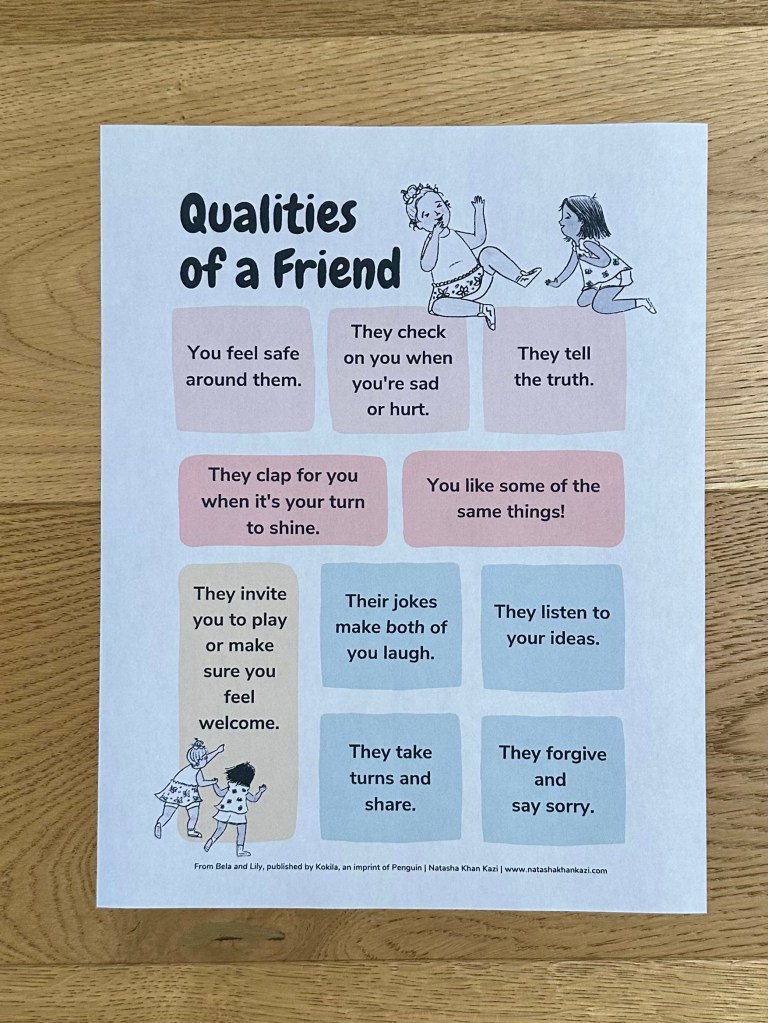
Friendship skills aren’t just a “nice to have” — they’re a core part of children’s emotional and social development. As a parent, educator, or caregiver, one of the greatest gifts you can give a child is a clear understanding of what it means to be a good friend and how to recognize one. That’s why I created a “Qualities of a Friend” poster — to give kids language, guidance, and confidence around friendships.
We often assume that children will naturally “figure out” how to be kind or navigate peer conflict, but social-emotional learning (SEL) is just that: learning. Kids need tools and guidance, especially in their early school years when their brains are still developing critical empathy and communication skills.
According to the Collaborative for Academic, Social, and Emotional Learning (CASEL), teaching SEL skills leads to better social behavior, fewer conduct problems, and even improved academic performance. In fact, one major study found that SEL programs in schools improved students’ academic performance by 11 percentile points on average (Durlak et al., 2011).
Learning how to be a good friend — and how to choose one — is a huge part of that.
Kids Need Clear, Positive Examples
It’s easy for adults to say things like “Be kind” or “Play nicely,” but what do those actually look like in real life? The “Qualities of a Friend” poster breaks down friendship into bite-sized, kid-friendly statements like:
- They listen to your ideas.
- They forgive you and say sorry too.
- They clap for you when it’s your turn to shine.
These qualities give kids a roadmap for how to act and how to expect to be treated. When they see these green flags regularly, they start to internalize them — and build stronger, healthier relationships.
Early Friendships Shape Long-Term Well-Being
A long-term study published in Child Development found that children who had strong, positive friendships in early elementary school were more likely to be socially adjusted and emotionally healthy as teenagers (Bagwell et al., 1998). Other studies show that kids with good peer relationships have lower rates of anxiety, depression, and bullying involvement.
When we give children tools to recognize respectful, joyful, and emotionally safe friendships, we’re helping build the foundation for their mental health and self-esteem.
How to Use the Poster
Whether you’re a teacher hanging it on your classroom wall or a parent putting it on the fridge, this poster can become a daily touchpoint. Use it during class meetings, bedtime conversations, or after a tough social day at school. Ask questions like:
- “Which one of these happened today?”
- “Which one would you like to get better at?”
- “Did someone show you one of these today?”
Download Free Printable
To download the 8.5×11 poster, just enter your email below.
Friendship isn’t always easy, but it can be taught. And when kids know what to look for in a friend — and how to be one — the ripple effect reaches far beyond the playground.
In Joy,
Natasha

 NATASHA KHAN KAZI